
Ukraine’s eVisa is a fully online travel document available to citizens of 45 countries. It costs $20-$60 depending on entry type and processing speed, takes 1-3 business days to approve, and allows stays of up to 30 days for tourism, business, medical, or private purposes. The program resumed in February 2025 after a three-year suspension caused by the Russian invasion. This guide covers everything you need to know to apply successfully.
What Is the Ukraine eVisa?
The Ukraine eVisa is an electronic travel authorization issued by the Ministry of Foreign Affairs of Ukraine (MFA). It allows citizens of 45 eligible countries to enter Ukraine for short stays without visiting an embassy or consulate. The entire application process happens online through the official portal at evisa.mfa.gov.ua.
Ukraine first introduced the eVisa on 4 April 2018, making it one of the earlier adopters of electronic visa technology in Eastern Europe. The program was suspended in 2022 following the Russian invasion of Ukraine but officially resumed on 19 February 2025 with an updated application system and expanded eligibility.
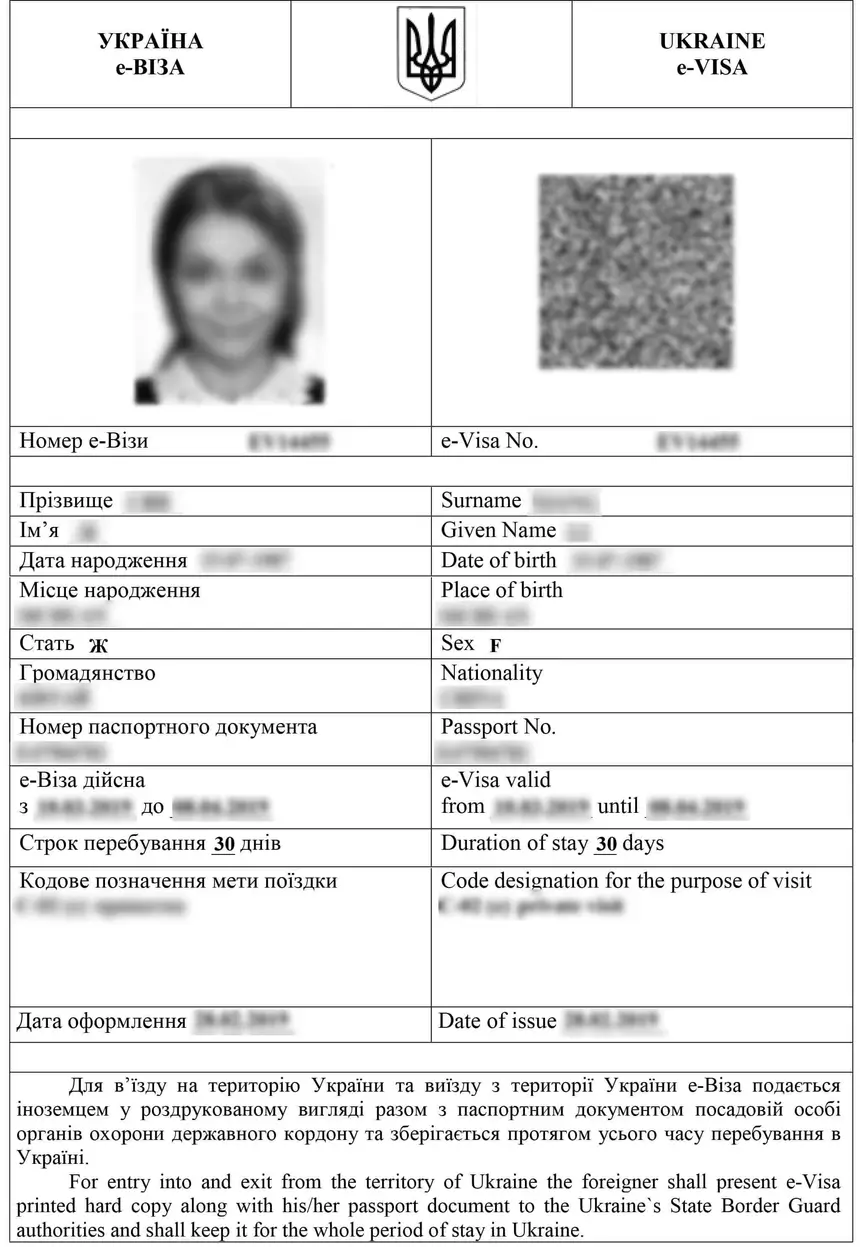
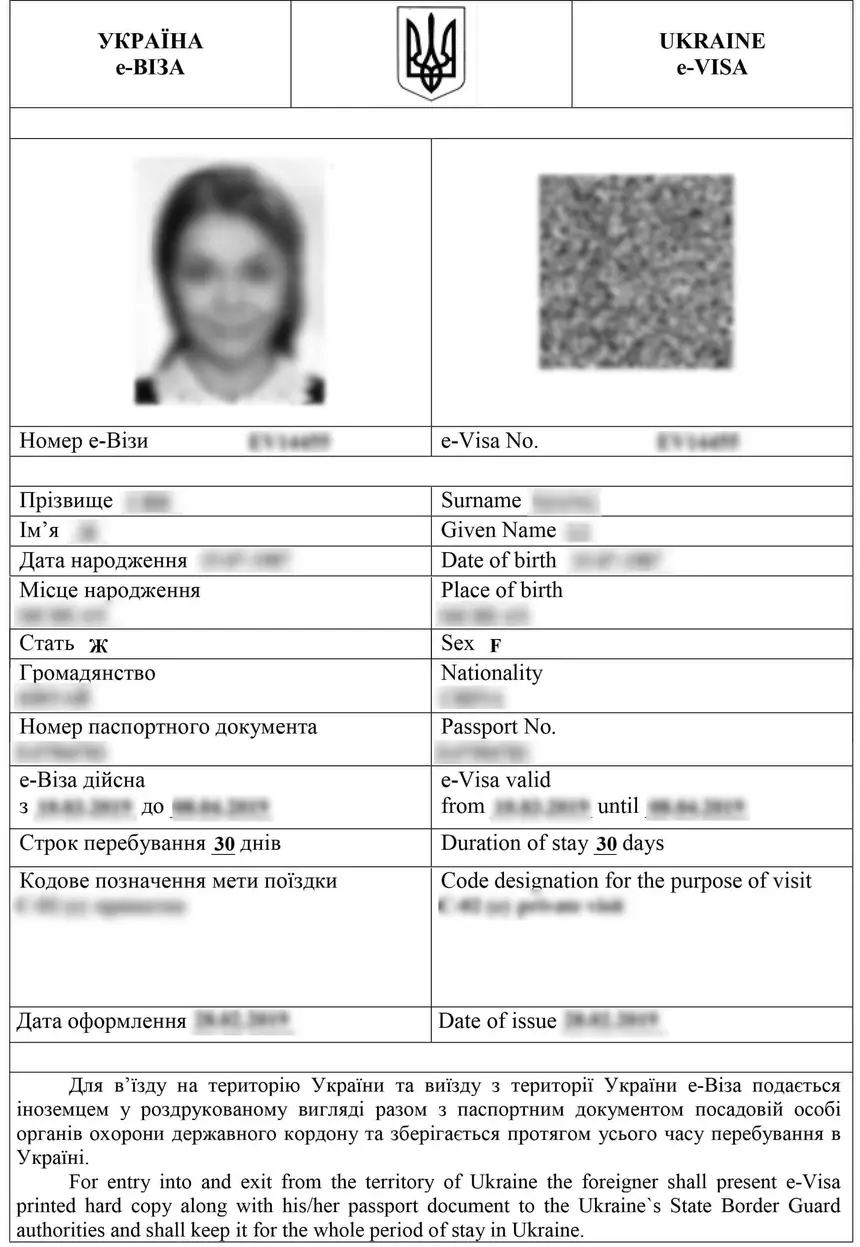
The eVisa covers multiple visit purposes including tourism, business, medical treatment, private visits, cultural events, scientific activities, educational programs, and sports competitions. Unlike a traditional embassy visa, the Ukraine eVisa requires no in-person appointments, no passportmailing, and no waiting in consulate lines. The approved eVisa is delivered as a downloadable PDF that you print or save on your device for presentation at the Ukrainian border.
Key distinguishing features of the Ukraine eVisa:
- 100% online application – no embassy visit required
- Fast processing – 1 to 3 business days
- Affordable – starting at just $20 USD
- Single or double entry options available
- 30-day maximum stay per visit
Who Can Apply – Eligible Countries
Citizens of 45 countries are eligible to apply for the Ukraine eVisa. These countries span Asia, Africa, the Middle East, and parts of Latin America and Oceania. The eligible nations include major countries such as China, India, Indonesia, Thailand, Turkey, Pakistan, Saudi Arabia, Egypt, South Africa, and the Philippines.
Here is the full list of eVisa-eligible countries grouped by region:
Asia: Bangladesh, Bhutan, Cambodia, China, India, Indonesia, Laos, Malaysia, Maldives, Myanmar, Nepal, Philippines, Singapore, Sri Lanka, Thailand, Vietnam (Note: Brunei and Vietnam are excluded from the eVisa but may have other arrangements)
Middle East and Africa: Bahrain, Egypt, Iran, Jordan, Kuwait, Lebanon, Oman, Qatar, Saudi Arabia, South Africa, Tunisia, United Arab Emirates
Americas and Caribbean: Dominica, Grenada, Haiti, Jamaica, Saint Kitts and Nevis, Saint Vincent and the Grenadines, Suriname, Trinidad and Tobago
Oceania and Other: Fiji, Nauru, Palau, Samoa, Solomon Islands, Tonga, Tuvalu, Vanuatu
Important distinction: Citizens of over 80 countries – including the United States, United Kingdom, Canada, all EU member states, Japan, South Korea, Australia, and New Zealand – do not need any visa at all to enter Ukraine. They enjoy visa-free entry for stays of up to 90 days within a 180-day period. If you hold a passport from one of these countries, you do not need to apply for an eVisa.
For citizens of countries that are neither visa-free nor eVisa-eligible, a traditional embassy visa (sticker visa) must be obtained through a Ukrainian diplomatic mission or consulate.
Ukraine eVisa Fees and Costs
The Ukraine eVisa fee depends on two factors: the number of entries (single or double) and the processing speed (standard or urgent). There are four pricing tiers:
| eVisa Type | Standard Processing (3 business days) | Urgent Processing (1 business day) |
|---|---|---|
| Single-entry | $20 USD | $40 USD |
| Double-entry | $30 USD | $60 USD |
All fees are paid online during the application process through the official MFA portal at evisa.mfa.gov.ua. There are no additional service fees, no agent commissions, and no hidden charges when you apply directly through the official website.
Be cautious of third-party websites that charge inflated fees for Ukraine eVisa applications. Some visa service agencies charge $50-$150 or more for the same eVisa that costs $20-$60 on the official portal. Always apply directly through evisa.mfa.gov.ua to avoid unnecessary costs.
The fee is non-refundable even if your application is rejected. This is why it is essential to ensure all your documents are complete and accurate before submitting your application.
How to Apply for Ukraine eVisa – Step by Step
Applying for a Ukraine eVisa takes approximately 15-20 minutes and can be done from any device with internet access. Here is the complete step-by-step process:
Step 1: Visit the official portal
Go to evisa.mfa.gov.ua and click “Apply for e-Visa” or “Register” to create a new account. You will need a valid email address.
Step 2: Create your account
Enter your email address, create a password, and verify your email through the confirmation link sent to your inbox.
Step 3: Fill in the application form
Provide your personal details exactly as they appear in your passport:
– Full name (as in passport)
– Date of birth
– Nationality
– Passport number and expiry date
– Purpose of visit
– Intended dates of entry and exit
– Accommodation details in Ukraine
– Contact information
Step 4: Upload required documents
Upload scanned copies of:
– Passport biographical page (clear, high-resolution scan)
– Digital passport-size photograph (white background, recent)
– Supporting documents based on your visit purpose (hotel booking, invitation letter, medical appointment, etc.)
Step 5: Pay the fee
Pay the applicable fee ($20-$60 USD) using a credit or debit card through the secure online payment system.
Step 6: Submit and wait
Review all information for accuracy, then submit your application. You will receive a confirmation email with your application reference number.
Step 7: Receive your eVisa
Once approved (within 1-3 business days), you will receive an email notification. Log in to your account on evisa.mfa.gov.ua to download your eVisa as a PDF document. Print a copy and also save a digital version on your phone.
Required Documents
To apply for a Ukraine eVisa, you need the following documents:
Mandatory for all applicants:
Additional documents by visit purpose:
All documents must be in English or Ukrainian. If your documents are in another language, you may need to provide certified translations.
Processing Time – How Long Does It Take?
The Ukraine eVisa processing time depends on the option you select during application:
- Standard processing: Up to 3 business days – costs $20 (single-entry) or $30 (double-entry)
- Urgent processing: Up to 1 business day – costs $40 (single-entry) or $60 (double-entry)
Processing times are counted from the moment your complete application is submitted with all required documents and payment. Weekends and Ukrainian public holidays are not counted as business days.
Factors that can delay processing:
– Incomplete documentation – missing or unclear scans require additional review
– Blurry or low-quality passport scans – the system may reject unclear images
– Peak travel seasons – application volumes may increase processing times slightly
– Information mismatches – discrepancies between your application and documents trigger manual review
Tip: Apply at least 1-2 weeks before your planned travel date even if using urgent processing. This provides a buffer for any unexpected issues or resubmission requirements.
Ukraine eVisa vs Visa-Free Entry vs Embassy Visa
Understanding which travel authorization you need is essential. Ukraine offers three distinct pathways for foreign visitors:
How to determine your pathway:
- Check if your country is visa-free – If you hold a passport from the US, UK, Canada, EU, Japan, South Korea, Australia, or 70+ other countries, you need no visa at all
- Check if your country is eVisa-eligible – If you are from India, China, Turkey, Pakistan, Indonesia, Thailand, or 38 other countries, you can apply online
- If neither applies – You must apply for a traditional visa at the nearest Ukrainian embassy or consulate
Single-Entry vs Double-Entry eVisa
The Ukraine eVisa comes in two variants based on the number of permitted entries:
Single-entry eVisa ($20 standard / $40 urgent):
– Allows one entry into Ukraine within the validity period
– Once you leave Ukraine, the eVisa is used up regardless of remaining days
– Best for travelers with a straightforward round-trip itinerary
Double-entry eVisa ($30 standard / $60 urgent):
– Allows two entries into Ukraine within the 30-day validity period
– Ideal if you plan to visit a neighboring country (Poland, Romania, Moldova, Slovakia, Hungary) and return to Ukraine
– Each entry permits a stay of up to 30 days total
When to choose double-entry:
– You plan a side trip to a neighboring country during your Ukraine visit
– Your travel itinerary involves entering Ukraine, leaving, and returning
– You are attending multiple events in Ukraine with travel in between
The price difference between single and double entry is just $10 for standard processing and $20 for urgent processing. If there is any chance you will leave and re-enter Ukraine, the double-entry option provides valuable flexibility at minimal extra cost.
Common Reasons for eVisa Rejection
While the Ukraine eVisa has a relatively high approval rate, applications can be rejected for several common reasons. Understanding these pitfalls helps you prepare a successful application:
1. Incomplete or missing documents
The most frequent reason for rejection. Ensure you upload all required documents for your specific visit purpose. A tourism application without a hotel booking confirmation will likely be rejected.
2. Passport validity issues
Your passport must be valid for at least 3 months beyond your intended departure date from Ukraine. If your passport expires within 3 months, renew it before applying.
3. Poor quality scans
Blurry, cropped, or low-resolution passport scans are automatically flagged. Use a scanner or a high-quality phone camera in good lighting to capture your passport’s biographical page.
4. Information mismatches
Discrepancies between your application form and supporting documents (different name spellings, wrong passport number, mismatched dates) trigger rejection. Double-check all entries before submitting.
5. Previous immigration violations
If you have overstayed a previous Ukrainian visa, violated entry conditions, or been deported from Ukraine, your eVisa application may be denied.
6. Purpose of visit not supported by documents
Business travelers without an invitation letter, medical tourists without a hospital confirmation, or tourists without accommodation proof will face rejection.
Prevention tips:
– Review your application twice before submitting
– Use high-quality document scans (minimum 300 DPI)
– Ensure name spelling matches your passport exactly
– Apply well in advance to allow time for resubmission if needed
Checking Your Ukraine eVisa Status
After submitting your Ukraine eVisa application, you can track its progress through the official portal:
Step-by-step status check:
- Go to evisa.mfa.gov.ua
- Log in with the email and password you used during application
- Navigate to “My Applications” or “Application Status”
- Your application will display one of these statuses:
If approved: Download and print your eVisa PDF immediately. The document contains a QR code and your personal details that Ukrainian border guards will verify upon arrival.
If rejected: The rejection notice will include the reason. You can correct the issue and submit a new application with the applicable fee.
Ukraine eVisa for Specific Nationalities
While the Ukraine eVisa application process is identical for all 45 eligible nationalities, certain countries have additional considerations:
Indian citizens:
India is one of the largest source countries for Ukraine eVisa applicants. Indian travelers should ensure their passport has at least 2 blank pages for entry stamps. Biometric data (fingerprints) will be collected at the Ukrainian border.
Pakistani citizens:
Pakistani passport holders should apply well in advance as applications may receive additional scrutiny. A detailed itinerary and confirmed hotel bookings strengthen the application.
Turkish citizens:
Turkey has a visa-free agreement with Ukraine for stays up to 90 days, so Turkish citizens generally do not need an eVisa. However, if your stay purpose requires documentation (business, work), verify current requirements before traveling.
Chinese citizens:
China had a temporary visa-free arrangement with Ukraine that ended in January 2021. Chinese citizens currently need an eVisa. Ensure all documents are translated into English or Ukrainian.
UK citizens:
British citizens enjoy a temporary visa-free regime with Ukraine valid until 30 January 2027. UK passport holders do not currently need an eVisa for short stays.
US citizens:
American citizens have enjoyed visa-free entry to Ukraine since 2005 for stays of up to 90 days. US passport holders do not need an eVisa.
Important Travel Tips and Restrictions
Before traveling to Ukraine with an eVisa, be aware of these important restrictions and recommendations:
Occupied territory restrictions:
Ukraine strictly prohibits entry to Russian-occupied territories, including:
– Crimea (including Sevastopol)
– Parts of Donetsk, Luhansk, Kherson, Zaporizhzhia, Kharkiv, Sumy, Mykolaiv, and Dnipropetrovsk oblasts
Foreign citizens who enter occupied territories without authorization will be denied future entry to Ukraine. The Ukrainian government does not issue special permits for regular visitors to these areas.
Biometric control:
Citizens of 70 countries are subject to biometric data collection (fingerprints and digital photograph) at Ukrainian border crossings. This includes nationals of Russia, Pakistan, India, Egypt, Nigeria, and many other countries. The biometric check is mandatory and conducted at the port of entry.
Travel insurance:
While not always mandatory for eVisa holders, travel insurance covering medical expenses in Ukraine is strongly recommended. Medical costs for foreign visitors can be significant, and Ukraine’s healthcare system may require upfront payment for treatment.
Border crossing tips:
– Carry a printed copy of your eVisa PDF in addition to a digital version
– Have your return ticket or proof of onward travel readily available
– Be prepared to show proof of accommodation (hotel booking or invitation letter)
– Bring sufficient financial means for your stay (bank statements may be requested)
– Answer border guard questions clearly and confidently about your visit purpose
Frequently Asked Questions (FAQ)
Can I apply for a Ukraine visa online?
Yes, citizens of 45 eligible countries can apply for a Ukraine eVisa entirely online through the official portal at evisa.mfa.gov.ua. The process takes about 15-20 minutes and requires a valid passport, digital photo, and supporting documents. No embassy visit is needed.
Do US citizens need a visa to Ukraine?
No, US citizens have enjoyed visa-free entry to Ukraine since 2005. American passport holders can stay in Ukraine for up to 90 days within a 180-day period without any visa or eVisa. You only need a valid US passport.
How much does a Ukraine e-Visa cost?
A single-entry Ukraine eVisa costs $20 for standard 3-day processing or $40 for urgent 1-day processing. A double-entry eVisa costs $30 (standard) or $60 (urgent). All fees are paid online through the official portal with no additional charges.
How long does it take to get a Ukraine e-Visa?
Standard processing takes up to 3 business days and urgent processing takes up to 1 business day. Processing times are counted from complete application submission, excluding weekends and Ukrainian public holidays. Apply at least 1-2 weeks before your travel date.
What is the rejection rate for Ukraine visas?
The Ukraine eVisa does not have an officially published rejection rate, but the approval rate is generally high for complete applications with proper documentation. The most common rejection reasons are incomplete documents, passport validity issues, and poor-quality scans.
What are the different types of visa in Ukraine?
Ukraine offers several visa categories: Type C (short-stay, up to 90 days) for tourism, business, and transit; Type D (long-stay, over 90 days) for work, study, and family reunification. The eVisa falls under the Type C category for short-term visits up to 30 days.
What is a Type C visa in Ukraine?
A Type C visa is a short-stay Schengen-style visa allowing stays of up to 90 days within a 180-day period. The Ukraine eVisa is a simplified Type C visa issued electronically for stays up to 30 days. Traditional Type C visas are issued through embassies for longer or multiple-entry stays.
What is the difference between visa type C and D?
Type C is a short-stay visa for visits up to 90 days (tourism, business, transit, medical). Type D is a long-stay visa for stays exceeding 90 days (employment, study, family reunification, permanent residence). The Ukraine eVisa is a Type C electronic visa.
Is the Ukraine visa free for US citizens?
Yes, Ukraine has a visa-free regime with the United States since 2005. US citizens can enter Ukraine with just a valid passport for stays of up to 90 days within 180 days. No visa, eVisa, or any prior authorization is required.
How much is the e-Visa fee for Ukraine?
The Ukraine eVisa fee ranges from $20 to $60 USD depending on the entry type and processing speed. Single-entry standard costs $20, single-entry urgent costs $40, double-entry standard costs $30, and double-entry urgent costs $60.
How long does it take for my eVisa to be approved?
Ukraine eVisa approval takes up to 3 business days for standard processing and up to 1 business day for urgent processing. Most applications with complete documentation are approved within the stated timeframe. Incomplete applications may take longer due to additional review requirements.
What are the different types of eVisa for Ukraine?
The Ukraine eVisa comes in two types: single-entry (allows one entry, costs $20-$40) and double-entry (allows two entries, costs $30-$60). Both types permit stays of up to 30 days and cover tourism, business, medical, private, cultural, scientific, educational, and sports purposes.